Second-Hand Marketplace Software
A marketplace selling used goods works differently from a site selling new ones: every item is one of a kind, its condition sets its price, and what really makes the transaction possible is trust. The infrastructure was designed assuming those three realities.
- Every item is one of a kind; it delists the moment it sells
- Single-unit stockEvery item is one of a kind; it delists the moment it sells
- Photograph and publish in the same moment
- Mobile firstPhotograph and publish in the same moment
- Haggling can be switched off or made compulsory
- Offers openHaggling can be switched off or made compulsory
- A perpetual licence; no annual licence renewal fee
- LifetimeA perpetual licence; no annual licence renewal fee
What Is Different in Second-Hand Marketplace Software?
Second-hand marketplace software parts company decisively with an e-commerce site selling new goods at one point: here every item is one of a kind. There is no second unit, no variant table, nothing to reorder from a supplier. A sold item has to come off the site in the same second, or two buyers purchase the same thing and the platform's credibility is damaged on day one.
The second difference is how the item itself is described. On a new product the make and model tell you everything; on a used one, its condition, its flaws and a genuine photograph are what decide it. That is why on a second-hand selling site the product form has to be short and mobile-friendly, yet still collect fields such as condition, size and a note on defects. That data later serves the buyer as filters.
The third is trust. The buyer worries about paying for something that will never be sent, and the seller about never getting their money. Payment flowing through the platform, shipping being created inside the system and post-delivery ratings remove that hesitation. In the PazaryeriSoft second-hand marketplace infrastructure, all three are met by modules addressed separately.
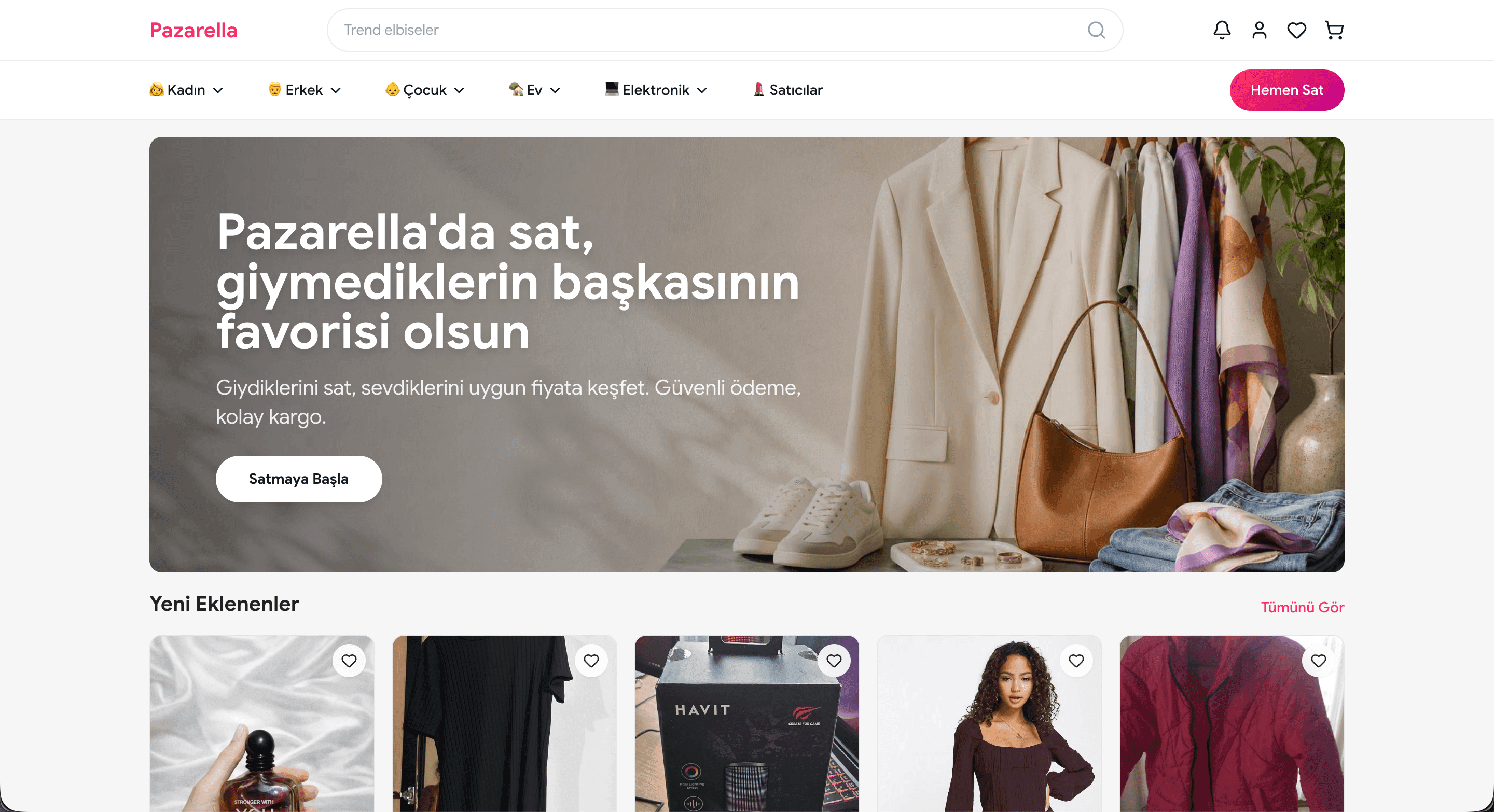
Pazarella: A Second-Hand Marketplace Serving the Circular Economy
Pazarella.com is a second-hand marketplace where unused items turn into cash at their true value and needed products are found at affordable prices. It was built on PazaryeriSoft's C2C infrastructure and uses the modules described on this page in production.
- Consumer-to-consumer (C2C) shopping model
- A broad category structure from fashion to electronics
- Escrow payment, offer, messaging and notification systems
- Community-growing features such as discounts and donations
The Modules Used-Goods Selling Requires
Each one answers a concrete problem met in the second-hand flow; this is not a generic e-commerce list.
Fast Publishing With Mobile Photos
The user shoots, orders and publishes from their phone. Multiple image upload, drag-to-reorder and cover selection are completed on one screen.
Condition and Size Fields
Condition options such as new, lightly used and well worn are defined per category. Size, measurements and a note on defects are stored as searchable fields.
Single-Unit Stock Management
Every item is one of a kind; it drops off the site the moment a purchase completes. Double-selling is prevented by locking the record at the point of order.
Offers and Haggling
The buyer sends an offer and the seller accepts or counters. A minimum offer can be set per category, or haggling switched off entirely.
Messaging on the Item
The conversation carries which item it was opened about, so the seller never confuses which thing is being asked about. Image sharing and read receipts are supported.
Favourites and Price Alerts
A liked item is saved and, when the seller drops the price, an alert goes to the users following it. Seller follows run from the same flow.
Contracted Shipping and Labels
After a sale the shipping label is generated by the system; the seller does not need to make a separate trip to a branch. The tracking number reaches both sides.
Seller Balance and Payout Requests
The sale amount is credited to the individual seller's balance. Payout requests, deductions and past movements appear in the user's own panel.
Buyers Rating Sellers
The rating given after delivery accumulates on the seller's profile and is shown to the next buyer as they decide.
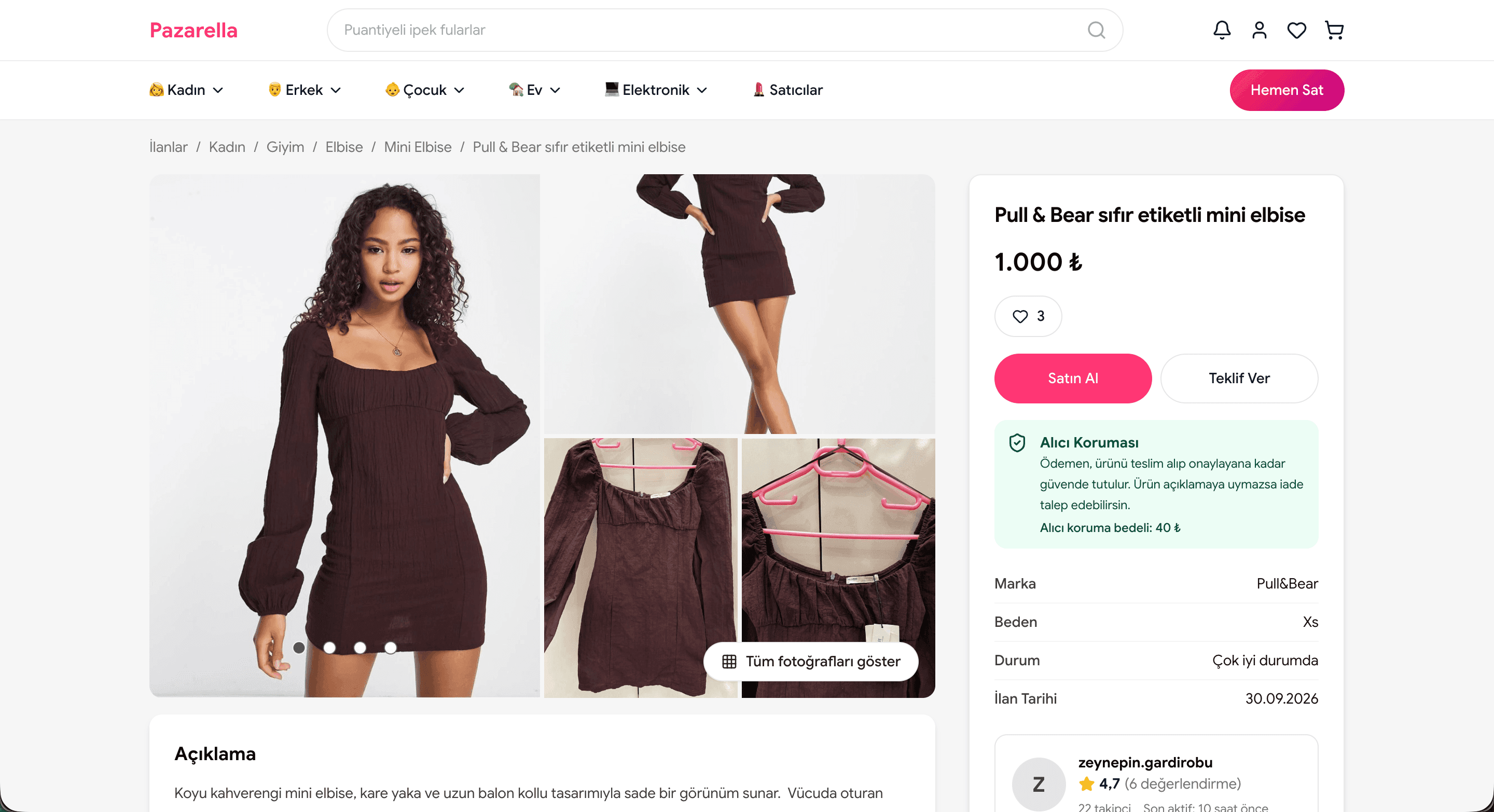
Escrow Payment and Buyer Protection
Trust is the biggest barrier in second-hand trade. On Pazarella the buyer's payment is held in escrow until the item is delivered and confirmed; if the item does not match the description, the buyer can request a return.
- Payment is not released to the seller until delivery is confirmed
- Buyer protection fee shown on the listing page
- Integrated shipping and tracking
- Seller ratings and reviews
How an Item Moves From Publication to Delivery
Six steps from the user registering to the rating. You can see which module is in play at each step.
The user registers and opens their profile
The account is activated with email verification. The profile holds both the user's buying history and their selling history in one place; no separate seller application is needed.
They add their item
When a category is chosen, only that category's fields open: size, condition, brand, note on defects. Photos are uploaded from mobile and the price and whether offers are welcome are set.
The item passes through moderation
Depending on your rule set the item is published directly or lands with an editor for approval. Prohibited category and content checks run at this step; on a rejected item the reason is passed back to the user.
A buyer finds it, asks and makes an offer
Search and filters work on the field data collected. The buyer adds the item to favourites, asks the seller a question and, if they wish, sends an offer.
Payment is taken through the platform
Collection happens in one go; the commission stays with the platform and the remainder is credited to the seller's earnings. Because the money flows through the platform, you can intervene in a dispute.
It ships, and ratings follow delivery
A label is generated and the tracking number reaches both sides. When delivery is complete the buyer rates the seller and the earnings open for payout.
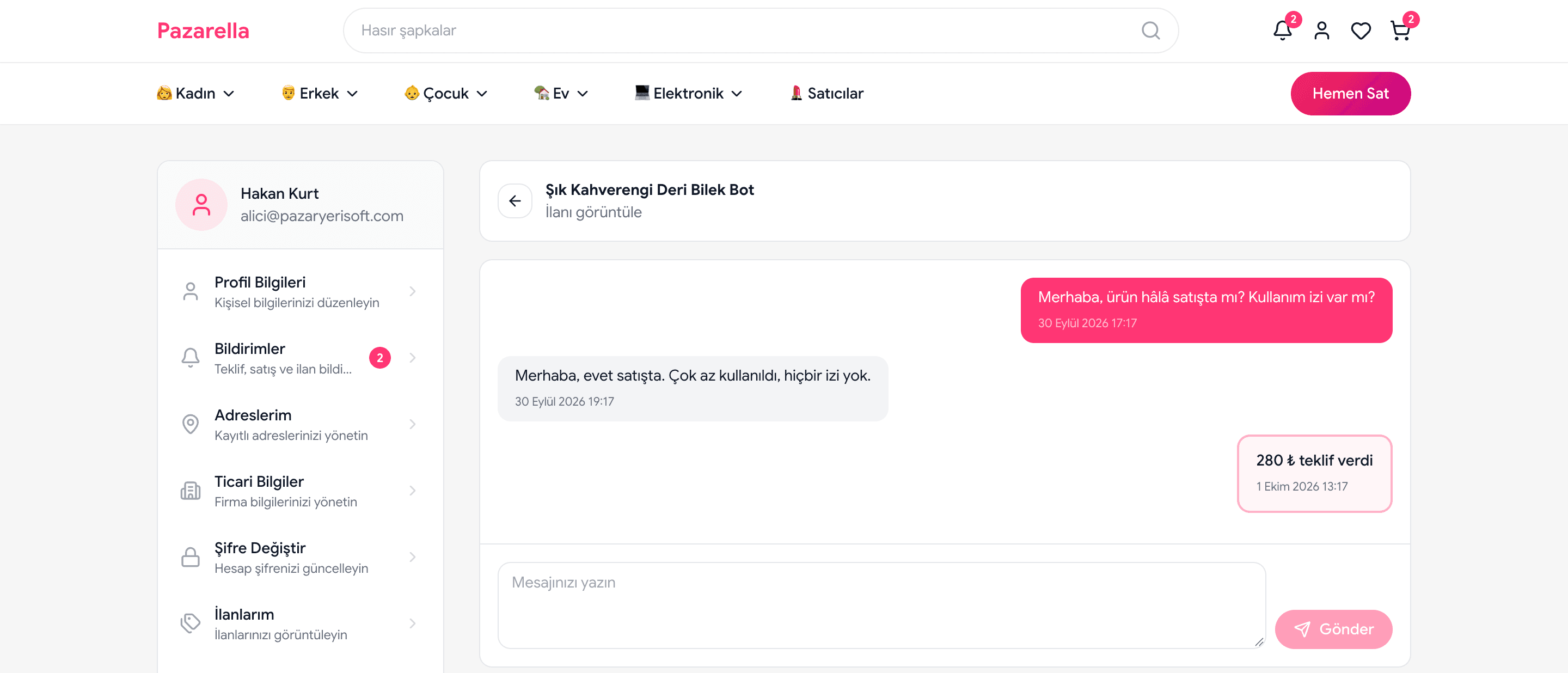
Negotiation Inside the Conversation: The Offer System
In second-hand shopping, prices are often settled by talking. On Pazarella the buyer makes an offer and the seller accepts, rejects or counters; every step appears as a card in the chat.
- Minimum offer and negotiation round rules
- A purchase window for accepted offers
- Open offers close when the price drops or the item sells
- Masking against sharing contact details
Moderation and Safe Shopping
The only thing that slows growth on second-hand marketplaces is a bad experience. Oversight works in two layers: before and after publication.
Pre-publication checks
- Item moderation with a draft → awaiting approval → live / rejected flow
- Automatic publication or compulsory editor approval, per category
- Prohibited item and content rules; matching records are never published
- A notification to the user with the reason on a rejected item
- User verification; phone and identity verification fall under project-specific development
Post-publication oversight
- User reporting: flagging suspicious items and accounts
- Complaint and support ticket management; the record is linked to the relevant item or order
- Reviewing the conversation history on one screen in a dispute
- Automatic warning and suspension rules for sellers who attract repeated complaints
- Transaction logs and an audit trail
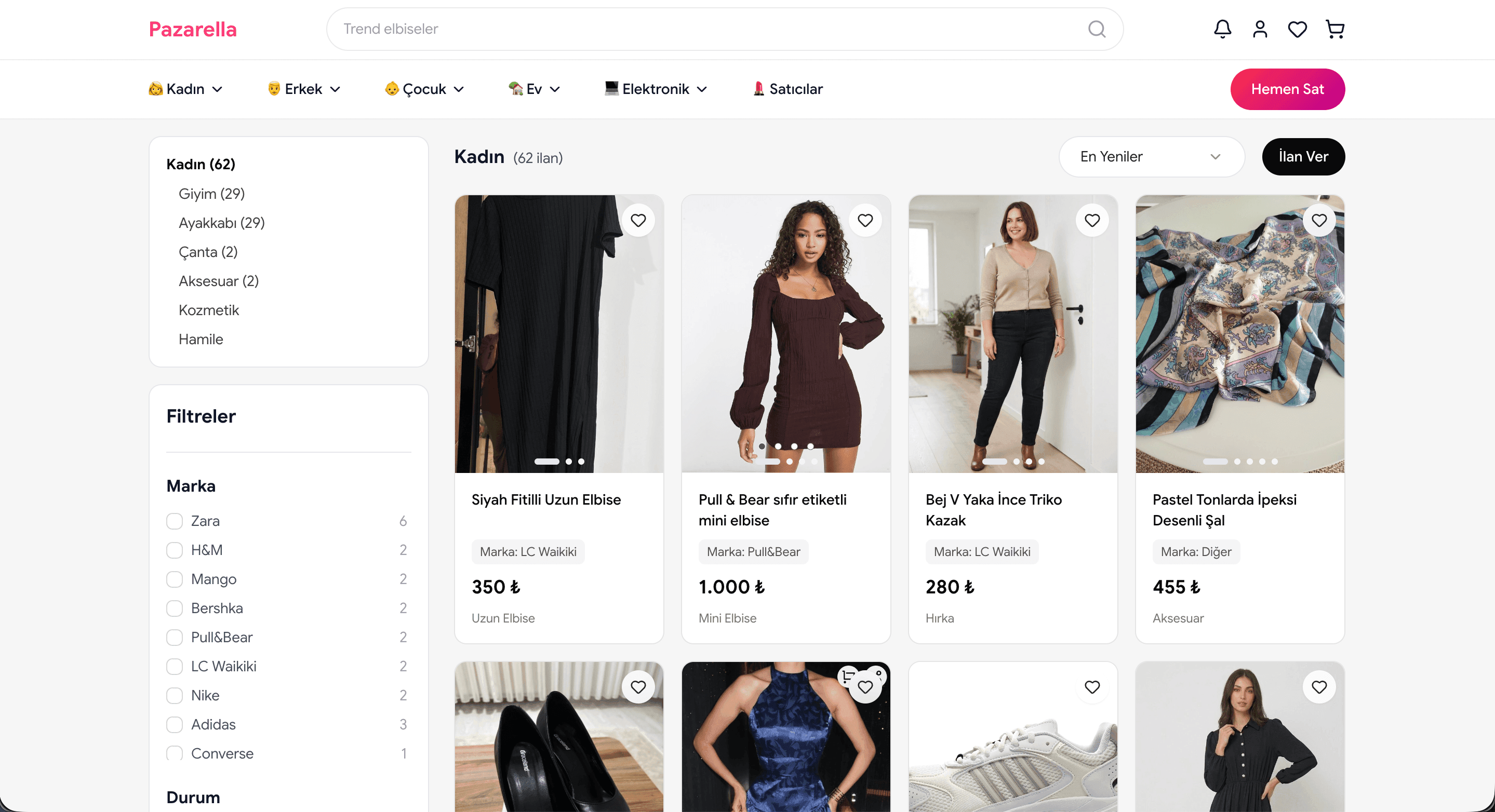
Wardrobe-Style Listings and Discounts
Second-hand sellers often sell a whole wardrobe rather than a single item. On Pazarella category, brand, size and condition filters surface the right item, and sellers can set tiered discounts for multi-item purchases.
- Brand, size and condition filters
- Wardrobe discount: increasing discounts for 2, 3 and 5 items
- Donating part of the sale amount to charities
- Favorites and seller follow system
Which Categories Does It Work In?
As the category changes, so do the fields asked and the delivery rules; there is no single template.
Clothing, Shoes and Accessories
The busiest category in the second-hand clothing app scenario. Because size, fit and a genuine photograph are decisive, the product form is kept short but rich in fields.
Fashion marketplace softwarePhones, Computers and Electronics
Device condition, remaining warranty and what is in the box are the first things a buyer asks. Because basket values are high, payment security and seller ratings come to the fore.
Electronics marketplace softwareHousehold Goods and Furniture
Delivery rules differ on bulky items: hand delivery, inner-city transport or contracted haulage options can be defined per category.
Vehicles, Parts and Hobby Equipment
Works with field templates such as make, model, year and mileage. Because it is usually haggling- and meeting-heavy, the communication flow comes to the fore.
Automotive classifieds software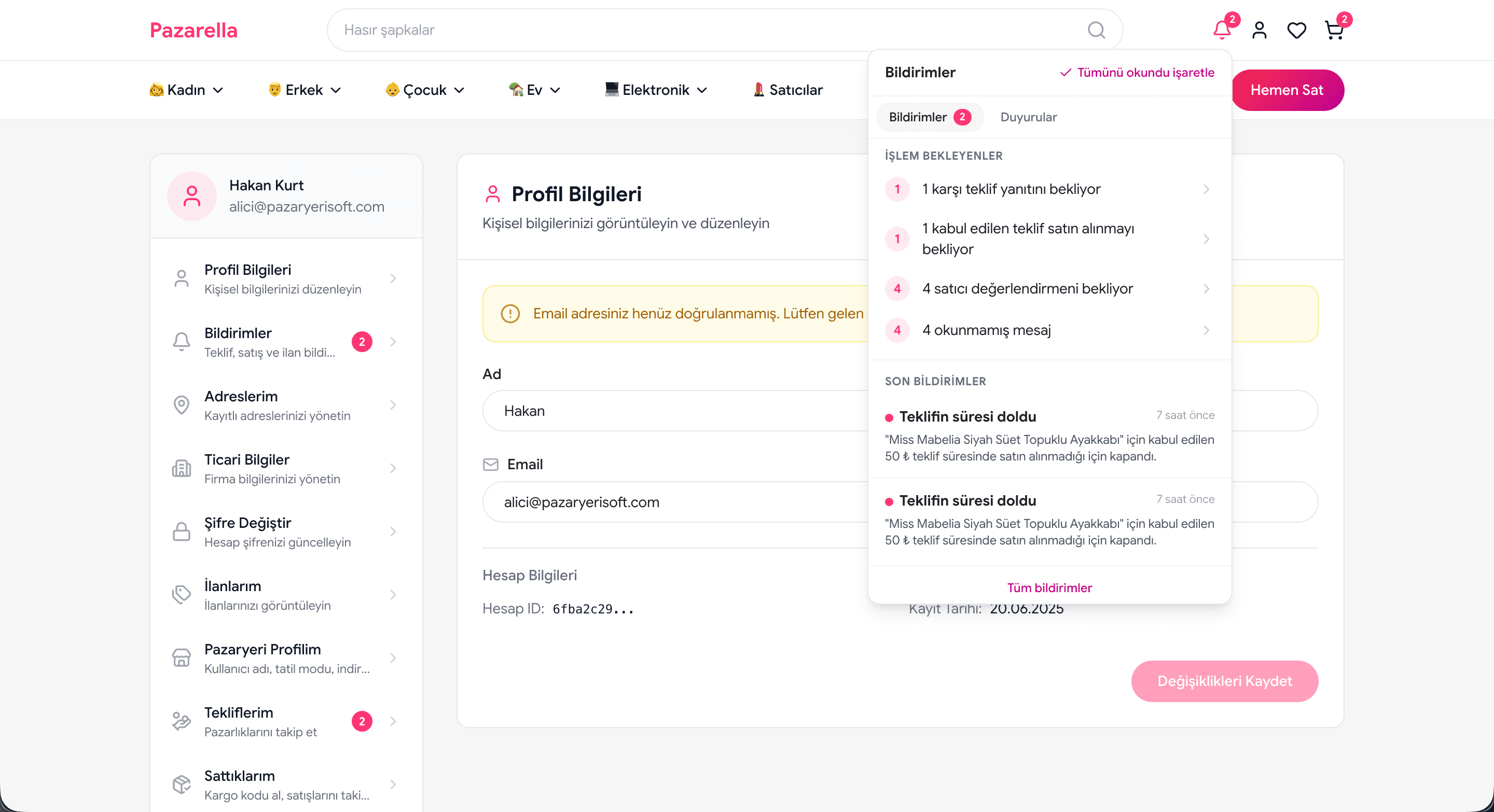
Notifications That Keep Buyers and Sellers Moving
In a C2C transaction both sides must act: offers must be answered, items shipped, deliveries confirmed. Pazarella's notification center shows every pending action with counters.
- Counter offers awaiting a reply
- Accepted offers awaiting purchase
- Purchases awaiting a review and unread messages
- Email notification preferences
The Business Model Advantages of Building a Second-Hand Marketplace
Demand for the circular economy is growing
Buying used goods is no longer only a price-driven choice; expectations around sustainability are growing the category permanently.
You do not carry the inventory cost
Because supply comes from users, you carry no stock, warehousing or purchasing risk. Growth depends on user numbers rather than capital.
A repeat-use habit
A user who sells once usually sells again and spends the balance they earn on the platform. That cycle lifts the retention rate.
Notifications carry conversion
New offer, price drop and message alerts bring users back; in the second-hand model a significant share of traffic comes from these triggers.
Frequently Asked Questions
The questions we meet most often on second-hand marketplace projects.
Related Pages
C2C Marketplace Software
The general framework and module list of the user-to-user selling model.
Fashion Marketplace Software
The size, variant and outfit design specific to the clothing and accessories category.
C2C Marketplace Packages
Package scopes, setup times and pricing for second-hand projects.
All Marketplace Features
The full account of the moderation, search, payment and shipping modules.
Start Building Your Second-Hand Marketplace
Let's plan together which category to start with and which field templates you need.
Setup support · Web + iOS + Android · 24/7 support